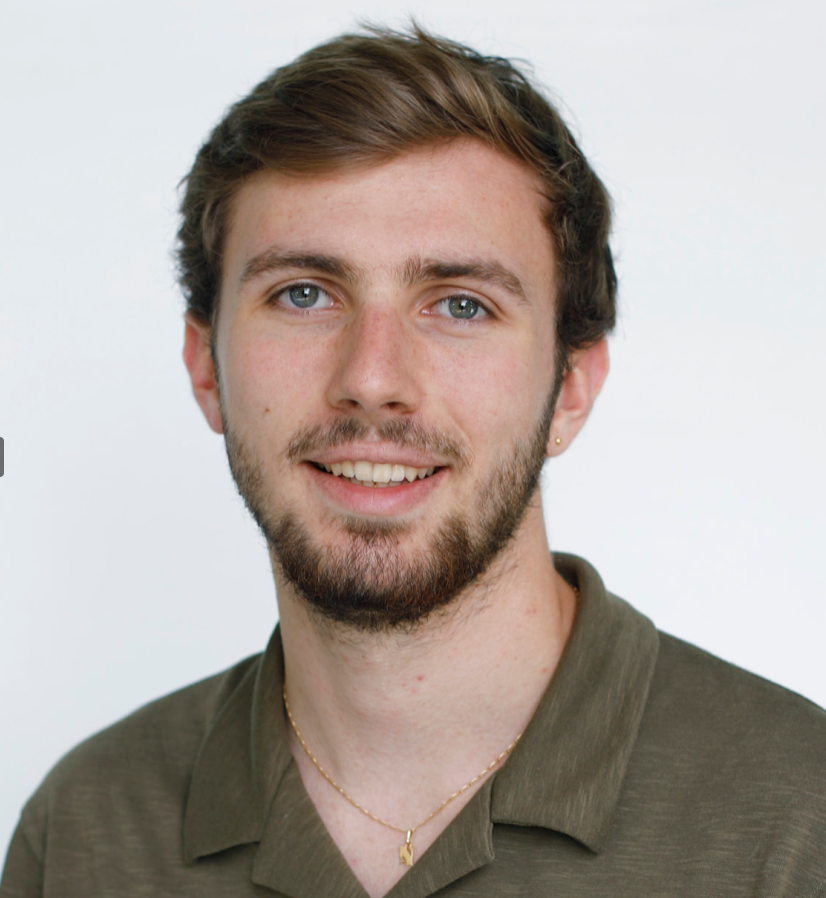
Informatics student at ENS Rennes
Currently research intern at the cellular computing group
@LMF (CNRS, Univ. & ENS Paris-Saclay)
noe.vincent[at]ens-rennes.fr
GitHub: @novasup666 @novincent
Research
Currently I am a research intern at the cellular computing group under the supervision of Pr. Thomas Nowak and Matthias Függer, my research is funded by an allowance from Université Paris-Saclay.
I am looking at the problem of co-culture of engineered strains of E. coli. I take this problem from the distributed algorithmics point of view. What "protocol" do real bacterial consortia execute? How to replicate it, standardize it? How can we model this problem? What is the complexity of such protocols?
Past work experiences
-
Winter 2025: Research intern @ IRISA (CNRS, Inria & Univ. Rennes), Rennes, France :
"Optimizing Action Significance in Citizen Science" under the supervision of Constance Thierry and Pr. David Gross-Amblard. Paper accepted for publication at TLDKS. -
Summer 2025: Research intern @ IRIF (CNRS & Univ. Paris-Cité), Paris, France :
"Distributed algorithms for graph conflict-free coloring" (internship report here) under the supervision of Pierre Fraigniaud. -
Summer 2025: Khôlleur/Teaching assistant @ Lycée Janson-de-Sailly, Paris, France :
Informatics oral exercises for 2nd year bachelor students (CPGE MPI) (~20 hours).
Education
- 2026: Master in Logic & Artificial Inteligence, Faculty of informatics, TU Wien, Vienna, Austria -> Erasmus exchange semester
- 2024-2028: Diplôme de l'ENS Rennes (département d'informatique), Rennes, France -> research oriented BSc & MSc in Informatics
- 2022-2024: CPGE MPI, Lycée du Parc, Lyon, France -> 2 years of intensive Math, Physics and Informatics BScs
Important
As many of my colleagues and fellow students, I want to condemn every act of violence against civilians that currently happens in Palestine, Lebanon, Ukraine, Iran, Congo, Sudan, and too many other places.
Siamo tutti antifascisti.
My interests
Since little, I have been interested in the study of collective behavior and interactions from the computational or logical point of view. Obviously, I was only recently able to name this properly, and it would appear only as a latent interest.
This appeared in different shapes along my scientific journey. First, my high school teacher Pr. Fréderic Zinelli taught us about graph theory; this was the first time I properly explored a formalization of relations between individuals, and it triggered my interest. I, for a long time, described graph theory as my main scientific interest.
Later, I discovered distributed algorithmics in G. Giakkoupis' lecture; this triggered an even greater interest in me; graphs became alive, and their nodes started thinking and talking. In the 149 Bulletin of EATCS (June 2026), Michel Raynal describes this field as "the science of (formalized) cooperation among a set of independent computing entities", which I find really convincing, especially because it puts the emphasis on cooperation. Almost during the same time, I dived into political theories regarding self-organization (among other things), and one cannot unsee the similarities between such analysis and distributed algorithmics. Among those, the necessity of cooperation and the absence of god, caesar, or tribune.
Now my interest lies in cooperation among living systems, bacterial consortia, interacting people, or ant colonies, and I try to work in a useful direction (from a very personal point of view).